
Fall Haulout: Why October Is the Best Month on the Bay
If you're going to haul once a year for bottom paint and zincs, do it in October. Here's why — and how to use the haul to catch problems before they get expensive.
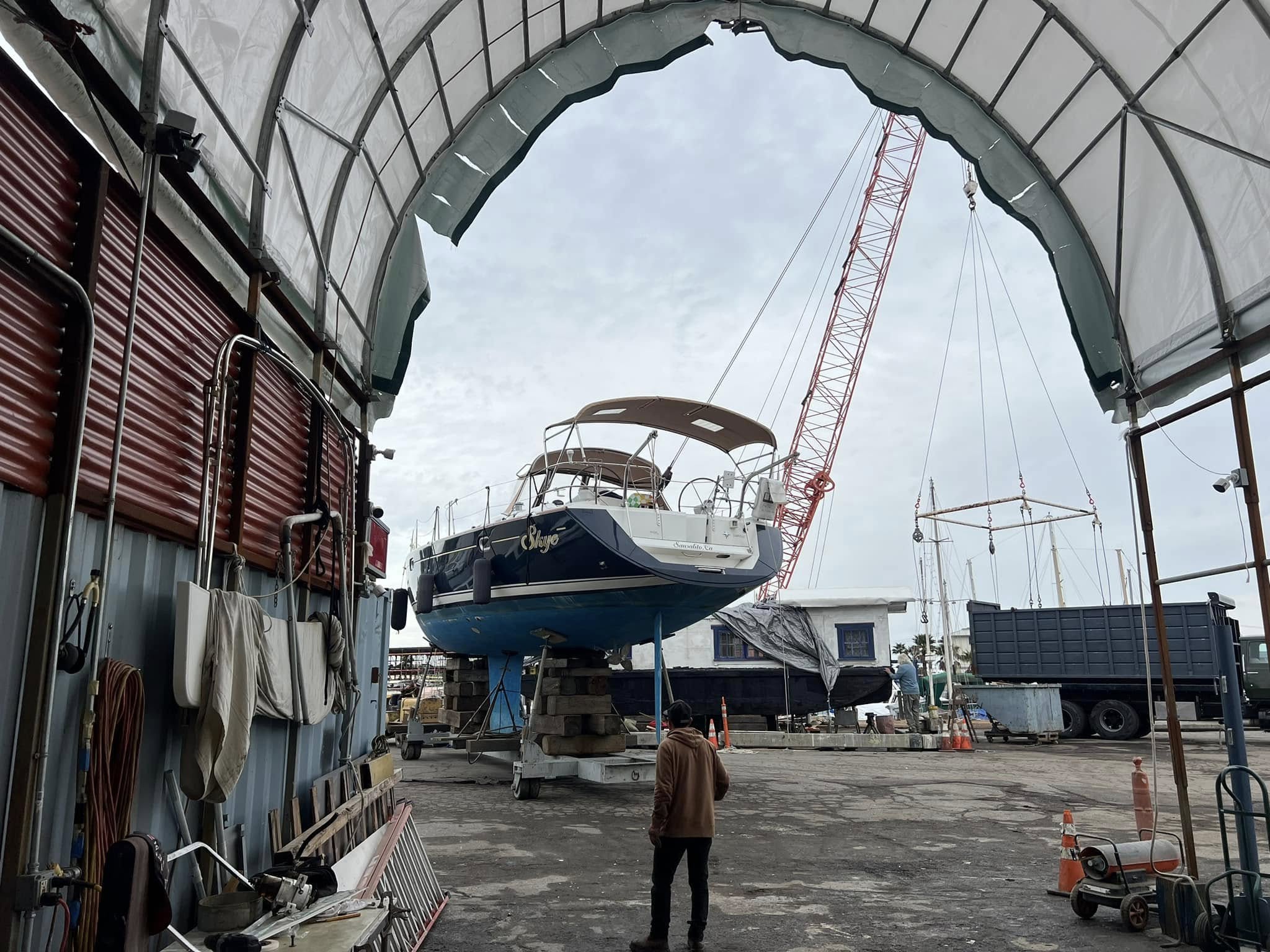
Most Bay Area boat owners haul in spring because that's what's culturally expected. They shouldn't. October is the better month — better weather for paint, fewer yards booked, more time to do the work right, and an empty calendar means we can catch and fix problems before next season instead of rushing to launch in April.
Why October beats April
Daytime temperatures in the 60s–70s with low humidity are ideal for paint cure. Yards aren't slammed (April is the worst — 8 week waits). You're not racing to launch for memorial day, so we can do real work. And catching problems in October means you can spread the spend across two payments instead of one, and have parts on order before the spring rush.
- Better paint cure conditions (60–75°F, low humidity)
- Yard availability — typically 2-week lead time vs. 8 in spring
- Spread cost across two budget cycles
- Catch issues before parts are on backorder in spring
- No pressure to launch for first sail
What we actually find on a fall haul
After a season of use, we routinely find: zincs at 30–50% (replace), cutless bearing wear (catch before it eats the shaft), prop dings (true while we're here), shaft seal wear (fall is the time to repack), cracked or chalking dock lines (replace), corrosion on through-hull bonding (fix before next season), and at least 2–3 zincs gone or 80% wasted.
- Zincs typically 30–50% wasted by October
- Cutless bearing wear (replace at 1/16" play)
- Prop nicks → true in our shop while it's pulled
- Shaft seal / packing wear
- Through-hull bonding wire corrosion
- Bottom paint coverage gaps at trailing edges
What to do during the haul
Even if you're only doing bottom paint and zincs, take advantage of the dry boat to inspect everything. Pull and inspect propeller (look for nicks, slip-fit looseness). Check hull thickness at thru-hulls with a moisture meter. Check shaft alignment after the boat sits dry for a few days. Photograph the bottom for next year's reference.
Off-season storage decisions
If you're not going to use the boat much over winter, fall is also when to decide: leave on the slip with a winterized engine and battery maintainer, or dry-store at the yard. Dry storage costs $300–$600/month on the Bay but protects the bottom paint from a full winter of growth and makes spring commissioning faster.